
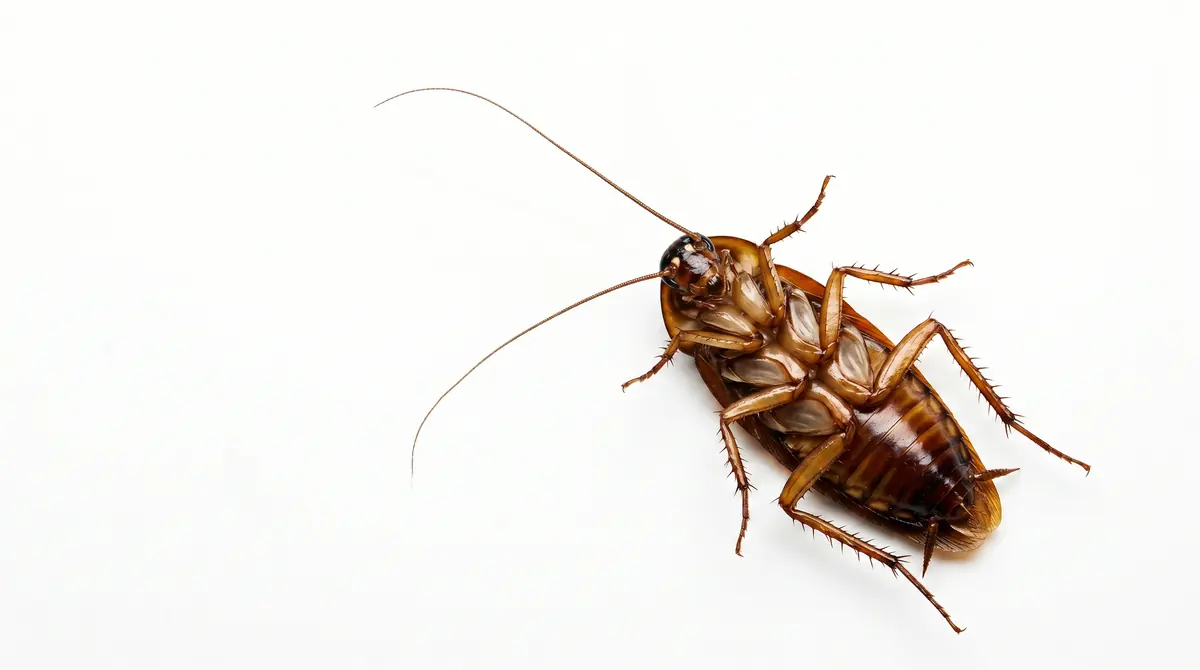
The first thing most people say on a roach call is some version of an apology: "I promise we keep a clean house." In Florida, no apology needed. Cleanliness lowers the ceiling on an infestation, but it doesn't decide whether roaches show up. The climate does.
Meet the two roaches that matter here
The big one — up to two inches, sometimes flying, always terrifying at 11pm — is the American cockroach, which Floridians politely call a palmetto bug. It lives outdoors in mulch, palms, and sewers, and comes inside for two reasons: water and air conditioning. Seeing one or two a month, especially in summer, means they're getting in — not that they're breeding inside.
The small one is the German cockroach, and it's the one that matters. It lives its entire life indoors, breeds fast, and almost never walks in from the yard. It hitchhikes: cardboard boxes, grocery bags, used appliances, a visitor's bag. One pregnant female is a full infestation on a delay timer — a single egg case carries 30 to 40 nymphs.
What they're actually after: moisture
Food matters less than you'd think; a roach can live on a smear of grease behind the stove. Water is the driver. Condensation on AC lines, a slow leak under the sink, a dishwasher drain, mulch beds piled against the slab — every one of these is a roach magnet no amount of scrubbing will fix.
The entry routes nobody checks
- Weep holes in brick and stucco walls
- Gaps under garage and exterior doors — if daylight shows, a palmetto bug fits
- Plumbing penetrations under sinks, behind the fridge, in the water heater closet
- Dry drain traps in guest bathrooms — the water seal evaporates and opens a highway from the sewer
- Attic vents and soffit gaps, especially near oak branches touching the roof
What works — and what doesn't
Foggers don't. They scatter roaches deeper into walls, contaminate every surface, and skip the egg cases entirely. What works is boring and specific: gel baits placed where roaches actually travel, insect growth regulators to break the breeding cycle, exclusion on the entry points above, and fixing the moisture. For German roaches, speed matters more than anything — the difference between treating at week two and month three is enormous.
If you're seeing small roaches in the kitchen during the day, that's a population under pressure and it's time to call it in. The inspection is free, and you'll have a price before any work starts.