
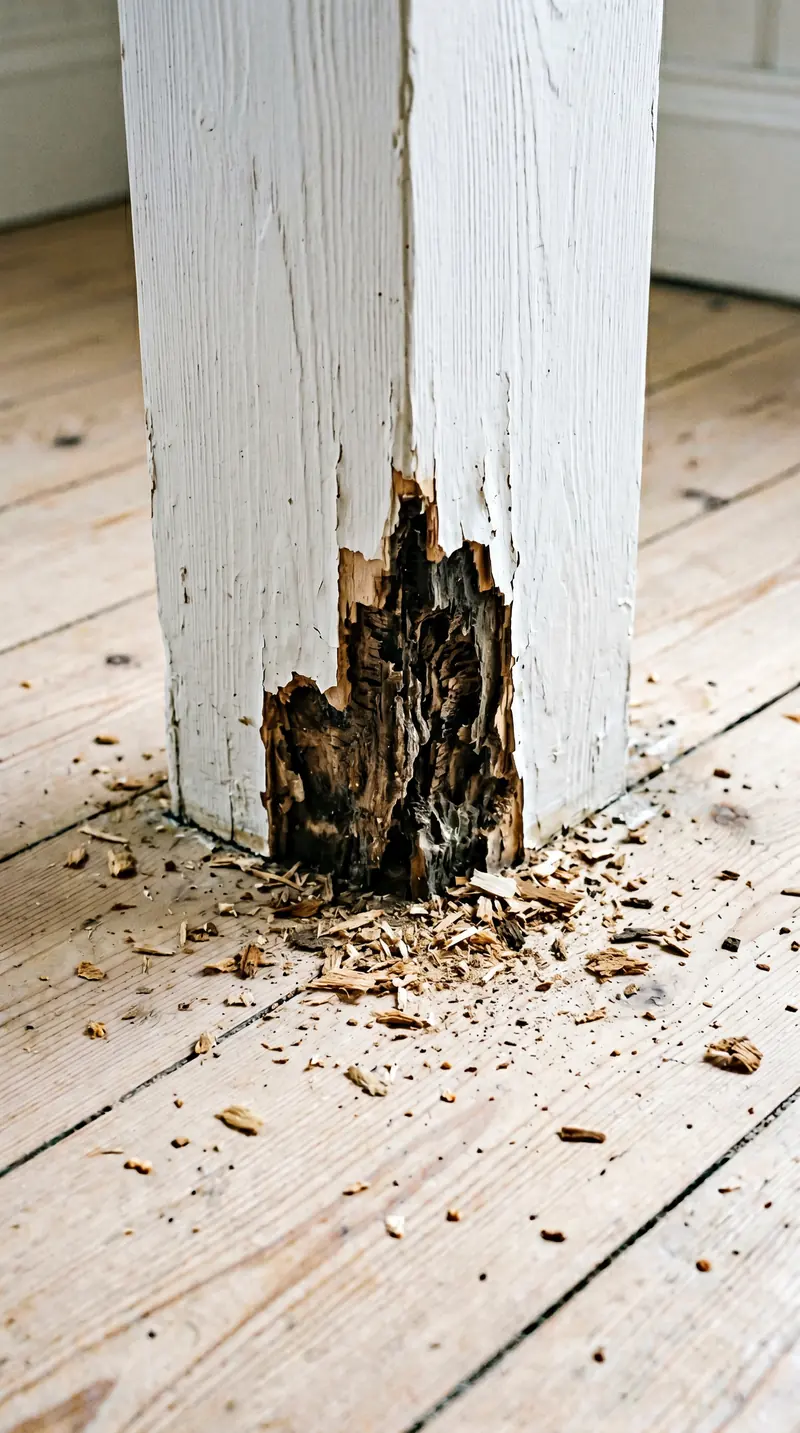
Central Florida carries some of the heaviest termite pressure in the country — Eastern subterranean termites everywhere, and Formosan colonies spreading a little further each year. The problem with both: they eat wood from the inside out, so by the time damage is obvious, it's expensive. Most homeowner's insurance won't touch it. Early detection is the whole game.
1. Mud tubes in the dark corners
Subterranean termites dry out in open air, so they commute through pencil-width mud tunnels built from soil and saliva. Check the garage where the wall meets the slab, the foundation stem wall behind shrubs, plumbing penetrations under sinks, and crawl-space piers. A tube the color of dried dirt running vertically up concrete is not dirt.
2. Wood that sounds wrong
Tap baseboards, door frames, and window sills with a screwdriver handle. Sound wood knocks; termite-eaten wood sounds papery and hollow, and a gentle press can punch through what looks like solid trim. Termites leave the outer shell intact — it's their roof.
3. Blistered or bubbling paint
Termite galleries carry moisture into the wood behind paint, which bubbles and blisters in a way that looks exactly like water damage. If a "water stain" appears on a wall with no plumbing above it and no roof leak, put termites on the suspect list.
4. Discarded wings on window sills
In spring, mature colonies send out swarmers — winged reproductives that fly toward light, land, and snap their wings off. A pile of uniform, translucent wings on a window sill or in a spider web means a colony is either in your house or close enough to matter. (Same-size wings mean termites; ant wings come in two sizes.)
5. Doors and windows that suddenly stick
Feeding galleries trap moisture that warps frames. A door that fit fine last season and now drags at one corner — with no obvious humidity or settling explanation — is worth an inspection, especially on the shaded side of the house.
Spot one? Don't poke it
Resist the urge to break open the tube or spray it. Disturbed termites simply reroute, and the evidence a technician needs to trace the colony goes with them. Take a photo, leave it alone, and book an inspection. Ours are free, and if we find activity you'll get a written treatment plan and price — not a scare pitch.