
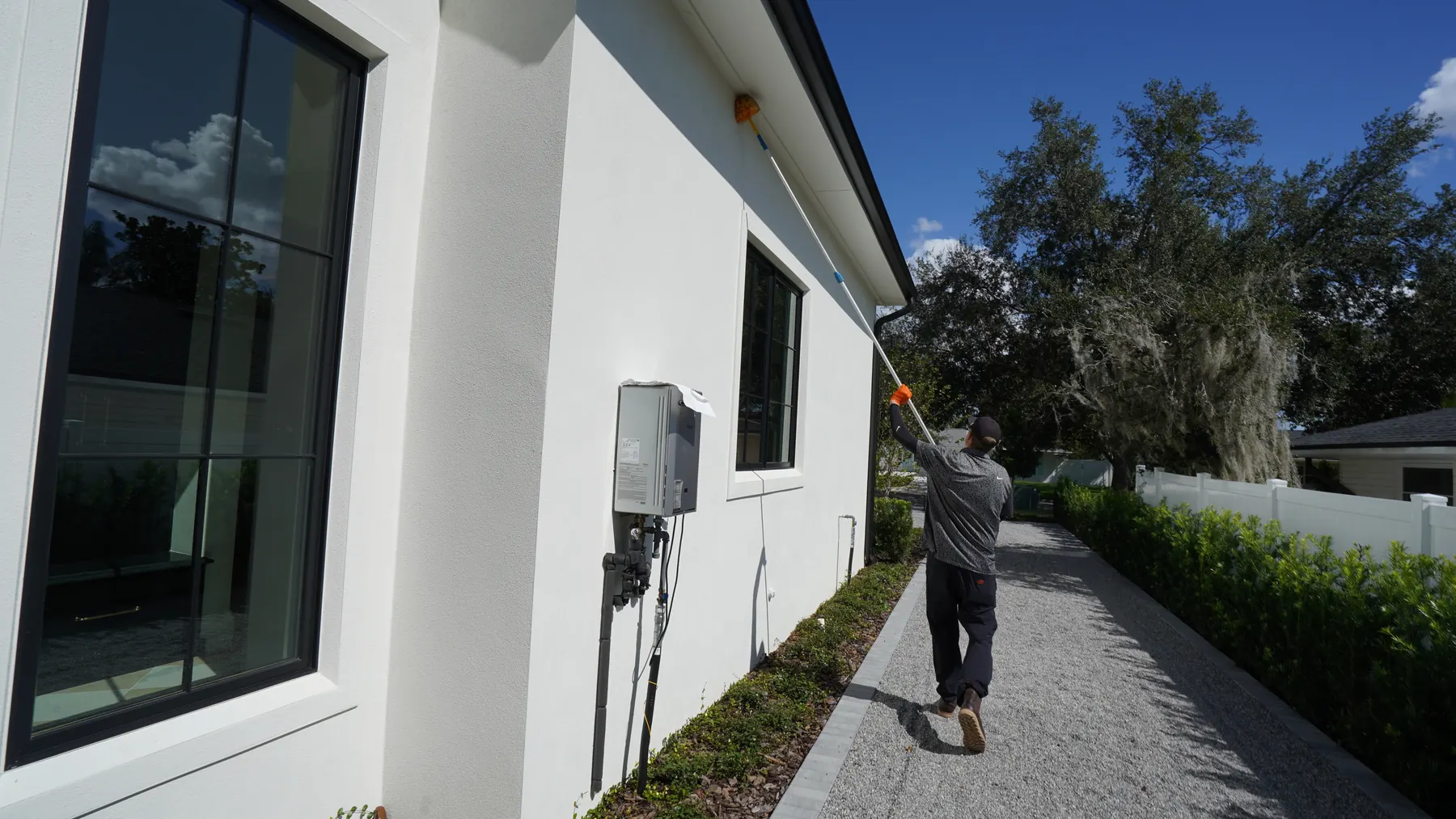
A block house can still need termite protection. The exterior walls may be masonry, but the home can contain wood trusses, framing, door trim, cabinets and furniture. Subterranean termites can cross masonry surfaces through sheltered routes to reach that wood. They do not need a wooden exterior wall to get started.
At P1, our termite inspection and treatment approach begins with the structure, the evidence and the termite involved. We explain what we can confirm before recommending work. A block home with no confirmed activity needs a different conversation from one with active termites or damage exposed during remodeling.
Before buying a plan, find out what protection is already in place and what the inspection shows. If you are unsure, ask us to inspect the property and explain the next steps.
What is still at risk inside a block home?
Think beyond the material you see from the driveway. Roof framing, interior framing and finish wood can remain vulnerable even when the outer walls are concrete block. Termites feed on cellulose, which is present in wood and paper products.
The University of Florida's termite prevention and control guide (ENY-2044) describes damage to structural timbers such as wall studs and framing, to trim such as baseboards and crown molding, and to household contents including cabinetry, furniture, books and stored items. A masonry shell does not remove any of those materials from the property.
The same guide notes that termites also tunnel through non-cellulose construction materials, including rigid foam board and spray foam insulation. That matters for two reasons: foam can carry activity past an inspection, and many pest control companies will not place a warranty on a home with spray foam insulation. If your block home has been re-insulated, raise it before you compare plans.
Subterranean termites usually live in the ground and can build mud tubes to reach wood above it. Cracks, joints and concealed spaces can provide access through or around parts of a building. Door frames are a common access point, because doors often sit on expansion joints. This is why an inspection includes accessible foundation edges, garage areas and plumbing locations rather than stopping at exposed wood.
You do not need to identify every possible route yourself. You do need to keep inspectable areas accessible and tell the inspector about additions, repairs or spots that stay wet. A covered wall junction or crowded garage can hide evidence that would otherwise be visible.
Identify the termite before comparing treatments
UF/IFAS puts this first: the most important part of termite control is obtaining a correct identification, because treatments for different species are drastically different and most of them are costly. Subterranean and drywood termites do not use a house in the same way, and a product or system aimed at one group should not be assumed to cover the other.
Subterranean termite plans address how termites forage and reach the structure, commonly through soil-connected routes. Bait systems and suitable liquid soil treatments can have a place in that work. The exact design needs to account for construction, access and the activity found.
Drywood termites live in wood without a connection to the ground. A soil treatment around the house is not a substitute for evaluating a drywood infestation. The extent and location of that activity determine which professional control options are appropriate. Do not assume that every provider offers every option.
Flying ants can also be mistaken for termites. A photo may help us start the conversation, but an unclear image cannot settle every identification. Winged swarmers and soldiers are the most useful forms for identification, so keep visible evidence in place where practical and ask how to preserve a specimen before cleaning it up. Termite researchers at the UF/IFAS Fort Lauderdale Research and Education Center will identify Florida termite samples free of charge if you follow their submission instructions.
Mud tubes and discarded wings are reasons to call, not a diagnosis. Our termite library page covers what the signs look like, and five signs of termite damage most Florida homeowners miss covers the ones people walk past. For your own walkthrough, photograph what is visible and leave probing or opening damaged wood to the inspector.
Inspection, treatment and protection are different purchases
These words sometimes appear together in a proposal, but each should have a clear meaning.
Inspection: what can we establish now?
An inspection looks for accessible evidence, damage, entry routes and conditions that raise concern. We check what we can reach and explain the limits. Stored belongings, wall finishes, insulation and inaccessible spaces can prevent a complete view of the structure.
Ask which areas were inspected and which were not. A finding of no visible activity is useful information. It is not a promise that every concealed part of the home is free of termites.
If the inspection is for a purchase, sale or other real estate requirement, say so when scheduling. A formal wood-destroying organism report has a different purpose from a routine service visit. Confirm the required report and scope in advance rather than assuming they are included.
Treatment: what problem are we addressing?
Treatment is the work intended to control the identified termite problem. The proposal should explain the target, the locations involved and why the method fits. Ask what evidence supports treatment and whether more investigation is needed before the scope is settled.
A treatment recommendation does not tell you how much structural repair is necessary. If damage raises a building-safety concern, a qualified construction professional needs to assess it. Replacing damaged wood without resolving termite activity can leave the pest problem unfinished.
Protection: how will the plan stay current?
Ongoing protection may involve a maintained system, inspections and follow-up. Ask what each scheduled visit includes. An annual inspection and bait-station servicing are not automatically the same task or the same schedule.
Monitoring checks for activity; by itself, it does not kill termites or create a protective treatment. Ask whether the plan includes an active bait or another control measure, how it is maintained and what happens when activity is found.
We recommend ongoing attention rather than waiting for the next swarm. UF/IFAS advises building termite prevention and control into your general home maintenance plan, which may include an annual renewal inspection by a trained and licensed termite inspector. New evidence between visits still deserves a call; a calendar reminder should not be a reason to wait.
Bait systems and liquid treatments: what to compare
Both methods have a place. Choosing one should involve the building and the termite issue, not a claim that one method wins at every house.
Bait systems rely on feeding and maintenance
Termite baits use a food material containing an active ingredient. Termites must find and feed on the bait for it to work. Certain bait systems can eliminate colonies, but installation is not a promise of an immediate result at every property.
Ask where the stations will go, how they will be serviced and how the provider will assess activity. Find out what to do if a mower damages a station or new landscaping covers it. Keep the station locations with your service records and show them to anyone working in those beds.
Baits may be useful where construction makes liquid treatment difficult. That does not mean any station arrangement suits any foundation. Placement and the ongoing service requirements need to fit the chosen system and the property.
Liquid treatment requires the right access
A suitable liquid soil treatment creates treated areas intended to interrupt subterranean termite access. Correct application requires knowledge of the structure, the label and the conditions around the house. Some properties require work around slabs or other hard surfaces to reach the necessary locations.
Ask the provider to explain the proposed treatment area, access limitations and any drilling or other disturbance before work begins. You should know whether the work involves your patio or garage slab before agreeing to it.
Later excavation, repairs or disturbed soil can affect treated areas. Tell your termite provider before work near the foundation so they can advise whether the protection needs reassessment. Do not assume an old treatment remains unchanged after a new patio or plumbing repair.
A combined plan needs a reason
Some higher-risk properties may benefit from more than one method. We still need to explain what each part contributes. Two methods do not remove the need for inspection, moisture correction or maintenance.
The EPA's guidance on identifying and controlling termites draws a line worth knowing: termiticides must demonstrate the ability to provide structural protection before EPA registers them, while products that only claim to kill termites are intended to kill the termites that contact the pesticide, not the whole infestation. A spray that kills visible insects is not evidence that the colony or the house is protected.
General household pest control is a separate conversation too. A routine treatment for ants or roaches should never be assumed to provide termite protection unless the written termite scope says what is included.
Make the foundation easier to inspect
Good maintenance does not guarantee a termite-free house, but it removes conditions that can make prevention and detection harder. Start with moisture and visibility.
Look for irrigation spraying the wall, a leaking hose connection or downspout discharge that keeps water beside the foundation. Arrange repairs with the appropriate professional. Inspect from safe, accessible areas rather than opening walls or crawling into places you cannot safely reach.
Keep soil and mulch from covering the wall areas used for inspection. Ask the inspector to show you the clearance your construction needs. Adding another layer of mulch every season can gradually cover a previously visible section of wall.
Avoid wood-to-soil contact and do not store scrap lumber or firewood against the home. Look at attached fences, steps and other wood features as part of the inspection conversation. Do not remove structural pieces yourself to create a gap.
Plants should leave room to see and reach the building. Our lawn and shrub care service considers irrigation and plant conditions, but it does not replace termite inspection. If a landscape change would cover stations or disturb treated soil, coordinate it with the termite provider first.
Check the paperwork before you choose a plan
A proposal should let you compare the actual work. Ask for plain answers to these questions:
- Which termite group is the plan intended to address?
- Is the recommendation based on confirmed activity, risk prevention or both?
- Which parts of the building were inaccessible during inspection?
- Where will treatment or stations be placed, and what access is needed?
- What inspection, monitoring and maintenance visits are included?
- What changes at the property should we report before work begins?
- Does any warranty provide retreatment, repair coverage or something else?
- What exclusions, renewal requirements and homeowner responsibilities apply?
Do not treat a familiar warranty name as proof of coverage. Read the written terms, including any species exclusions and any insulation exclusions. P1's recommendation for your property should explain the work and its limits; this article does not establish warranty or repair terms.
For an existing home, gather prior treatment records, renewal notices and reports if available. For newer construction, request the treatment documentation rather than relying on a verbal statement that the house was pretreated. Records help explain the starting point. They do not eliminate the need to inspect current conditions.
Your block-home termite protection checklist
Use this before an inspection and keep it with the service paperwork:
- Collect prior treatment records and the current agreement, if there is one.
- Photograph possible evidence and record exactly where you found it.
- Leave mud tubes and questionable damage undisturbed for assessment.
- Clear reasonable access to garage walls and other inspection areas.
- List leaks, drainage issues and irrigation overspray.
- Note recent or planned construction, landscaping and soil disturbance.
- Say whether the home has spray foam or rigid foam insulation.
- Ask which areas could not be inspected and what follow-up is needed.
- Confirm treatment scope, maintenance responsibilities and written coverage.
Before any application, discuss pets, children, wells, pools, gardens and other sensitive areas with the provider. Follow the product-specific preparation and reentry instructions. There is no single waiting period that fits every termite treatment, and we do not describe every treatment as safe for every setting.
After work, keep the records and follow the inspection or maintenance plan. Report new evidence rather than treating it yourself or waiting for the next renewal. We need to know if the situation changes.
Questions about block-house termite protection
Do we need protection if the inspector finds no termites?
No visible activity does not remove future risk. Ask about the home's construction, existing protection and maintenance needs. A preventive plan can be discussed without claiming an active infestation exists.
Can bait stations protect against drywood termites too?
Subterranean termite bait systems are not a substitute for drywood termite control. Drywood termites live in wood without a soil connection, so identification and an appropriate separate plan matter.
Does a new block home need ongoing inspections?
Yes, new construction can still need inspections and maintenance. Ask for the initial termite-protection records, learn the renewal requirements and report changes that could affect treatment or access. New does not mean termite-proof.
Ask for a plan that fits the house
If you own a block home and cannot explain its current termite protection, start with an inspection and the records you have. Ask P1 to inspect the property and discuss termite treatment or ongoing protection. We will explain what we found, what remains uncertain and the next steps that fit the structure.