
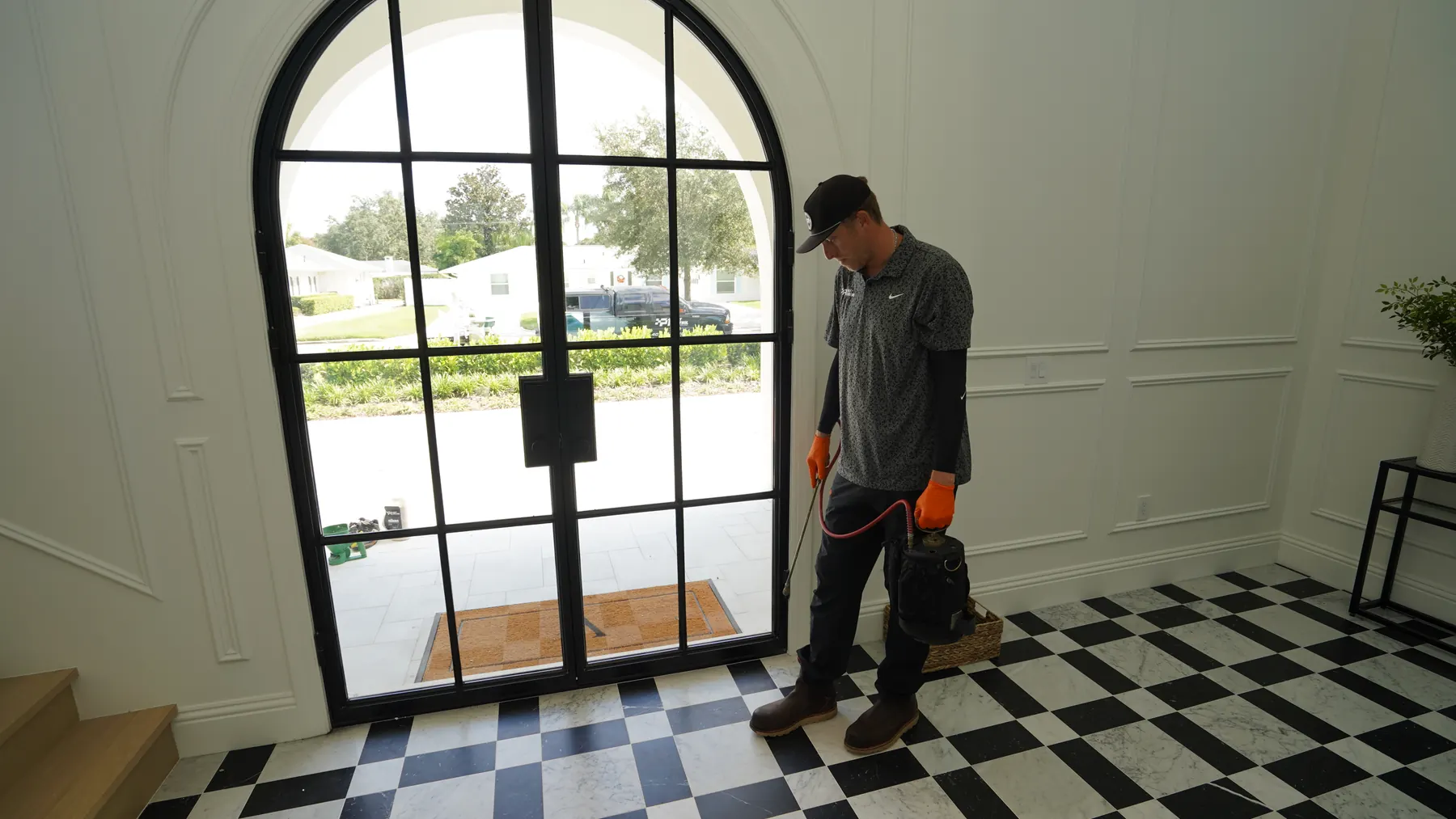
If bugs keep showing up in your Florida home, check the route before reaching for another spray. A worn door sweep, a gap around a pipe or a wet planting bed beside the garage can keep feeding the problem. Killing the bug you see does not tell you how the next one will get in.
Our approach to household pest control starts with identification and the source. We want to know whether pests are entering from outside, living inside or arriving in something you brought home. If activity keeps returning, ask us to inspect the property and explain the next steps.
You can help narrow it down without taking apart the house. Walk the route from the room where you saw activity to the outside wall, then check the conditions on both sides. Leave electrical work, roof access and unfamiliar building openings to the right professional.
Start where you saw the pest
Before cleaning away every trace, take a clear photo if you can do so safely. Record the room, the nearest door or fixture, the time and whether this was one insect or repeated activity. A note such as "ants beside the laundry-room pipe opening after irrigation ran" tells us where to start looking.
Look for a pattern rather than deciding the cause from one sighting. Activity beside an exterior door makes that doorway worth checking. Activity around an appliance needs an interior inspection too. Rain may change outdoor conditions, but seeing a bug after a storm does not prove the storm caused it.
For a simple sighting log, write down:
- Where you first noticed activity and where it appeared next.
- Whether insects were moving along a wall, cabinet edge or threshold.
- Recent rain, irrigation changes, leaks, deliveries or moving boxes.
- Any product already used, including where and when you applied it.
Do not spray an unknown insect trail simply to make the evidence disappear. Identification comes first. The EPA's integrated pest management principles put monitoring and identification, then prevention, ahead of evaluating a control method, so that pesticides are not used when they are not needed and the wrong product is not chosen. In a home, that means finding out what needs correcting before deciding what needs treatment.
Check exterior doors and the garage
Close each exterior door and inspect the bottom and corners. Look for daylight, torn weatherstripping, a loose sweep or a threshold that no longer meets the door. Open and close it again. A door can appear sealed until the latch pulls it into a different position.
Check the garage door along the bottom and both sides. Its flexible seal can wear, shift or fail to meet an uneven surface. Then inspect the door between the garage and living space. Repairing the outer opening while ignoring the inner door leaves another route into the home.
A pet door deserves its own check. The flap should return to its closed position, and the frame should fit the opening. Look around its edges rather than assuming the flap is the only place a pest could pass through.
Keep stored items away from the edges you need to inspect. Cardboard stacked against a garage wall hides the wall-to-floor junction and makes activity harder to notice. Put pet food in a closed container and clean up spilled food. These steps improve access and remove resources without adding pesticide.
For ordinary door seals, a repair may be straightforward. Garage-door mechanisms and springs are a different matter. Have a qualified repair company handle those parts rather than adjusting them during a pest check.
Follow plumbing and utility openings
Under a sink, look where the pipes pass through the cabinet or wall. Check nearby shelving for dampness, staining or damaged material. A decorative cover around a pipe can hide an opening without actually closing it.
Repeat the visual check in the laundry area, water-heater space and other accessible utility areas. Outside, note openings around lines that enter the building. Photograph anything questionable so the repair person can see the location before arriving.
Not every visible hole is a defect. Some openings are there for drainage or ventilation. Do not fill weep holes, block vents or pack material around electrical equipment because an opening looks suspicious. Ask a qualified contractor what that opening does and which repair preserves its function.
If an opening also has a leak, address both problems. Sealing the gap while leaving damp material behind does not remove the water source. We can point out the pest conditions, but a plumber or contractor may need to make the repair.
Check windows, screens and high access points from the ground
Look at window screens for tears, loose edges and frames that no longer sit correctly. Check that windows close fully. On a screened patio, inspect the door corners and lower panels as well as the larger screen sections.
From the ground, look for damaged soffits, displaced vent screens or vegetation touching the roof. Record what you can see. Do not climb onto a roof or enter an unfamiliar attic to complete this checklist.
Larger openings can involve a different problem from household insects. If you hear attic noises or find gnawing or suspected rodent droppings, ask about rat and rodent inspection and read our guide to attic rodent entry points and repeat problems. Closing an opening without identifying what is using it can leave the removal and exclusion work unfinished. Avoid disturbing suspected rodent waste during your walkthrough.
Find the water source, including irrigation
A damp corner needs an explanation. Check beneath sinks, around appliances and near accessible plumbing. Outside, look for a hose connection that drips, a drainage outlet that keeps the soil wet or an irrigation head aimed at the wall.
Watch the irrigation while it runs if you can do so safely. The timer setting does not show where the water lands. A shifted spray head can repeatedly wet the same doorway or planting bed while the rest of the zone looks normal.
Separate a temporary wet area after rain from a location that stays wet between weather events. Write down when you checked it. That observation can help a plumber, irrigation contractor or drainage professional find the cause.
We would rather tell you that a leak needs fixing than keep treating around it without explaining why pests are there. Source correction can reduce the need for additional applications. It does not replace identification or treatment when a pest population has already established itself.
Do not shut off necessary pet drinking water as a pest-control shortcut. Clean up spills, keep feeding areas tidy and discuss a practical routine that meets the animal's needs.
Walk the planting beds beside the house
Check the strip nearest the building before worrying about the whole yard. Look for accumulated leaves, deep mulch against the wall, stored lumber and branches resting on the structure. Dense vegetation can hide the foundation and make it difficult to inspect or reach a recurring activity area.
You should be able to see and reach the wall. Remove loose debris where safe, keep stored wood away from the house and arrange appropriate pruning when plants have outgrown their space. Do not strip a healthy landscape simply because insects live outdoors.
If the lawn and shrubs have their own problems, our lawn and shrub care service looks at insects alongside irrigation, mowing, soil and plant conditions. A turf treatment and a household perimeter treatment are not interchangeable. The product must fit the application site and the pest.
Keep termite inspection access in mind too. Soil or mulch that hides the base of the wall can conceal activity. If you discover a mud tube or questionable wood damage, leave the evidence in place and ask about termite inspection and protection. General household pest treatment should not be assumed to cover termites, and a block home still needs its own termite plan.
Decide whether the problem is outside, inside or both
An exterior route and an indoor infestation can exist at the same property. Finding a worn threshold does not prove every insect came through it. We still need to identify the pest and inspect the areas where it is active.
For many invading pests, the exterior deserves most of the attention. That may include entry-point repairs, habitat corrections and a suitable perimeter treatment. Interior applications should have a reason, such as confirmed activity in an area where the chosen product is labeled for use.
An established German roach infestation needs a different plan from an occasional large outdoor roach at a doorway. Repeated activity around appliances, cabinets or stored items needs inspection rather than another lap around the foundation. Sighting frequency alone cannot establish whether roaches are breeding inside; we need identification and an inspection. Our roach library page covers the difference between the two, and why clean Florida homes still get roaches explains what they are actually after.
Termites, bed bugs, fleas and rodents can also require separate preparation, treatment or follow-up. Ask what the proposed household service includes and what needs its own scope. A broad list of pests on a website is not a substitute for that conversation; our pest library sets out what each one involves.
Make the next service visit easier to use
Show us the sighting log and the areas you could not inspect. Mention locked gates, pets, a nursery, aquariums, pools, gardens and food-preparation spaces before work begins. If someone else applies products at the property, share that information too.
Ask for an explanation of the target pest, the treatment areas and the corrections you should make. You should know which task belongs to you, which belongs to the pest-control provider and which requires a contractor.
The EPA's do's and don'ts of pest control recommend removing sources of food, water and shelter, asking a professional to find and correct the source before applying pesticides, and keeping applications to targeted locations rather than spraying a whole room. The same page warns against assuming that twice as much is better, and against using outdoor chemicals indoors. Apply only products approved for use in homes; the label lists where a chemical may be used.
After service, follow the specific instructions for keeping people and pets away from treated areas and for returning to them. Ask before mopping, painting or pressure washing a treated surface. Do not apply another spray over professional baits or treatment areas without discussing it with us.
Your home entry-point checklist
Use this list to turn the walkthrough into a repair plan:
- Photograph and record recurring sightings before treating them yourself.
- Check exterior door sweeps, thresholds and pet-door frames.
- Inspect the garage seal and the door into the house.
- Look at accessible pipe and utility openings without blocking functional vents or drains.
- Check screens and window closure, and view higher openings from the ground.
- Record leaks, irrigation overspray and places that stay wet.
- Clear loose debris and restore inspection access beside exterior walls.
- Note boxes, pet food and stored items that hide activity or provide resources.
- Assign each repair and record when it is completed.
- Share continued or changed activity with the pest-control provider.
Keep checking the same locations after repairs. If sightings continue, report where and when rather than adding products at random. That helps us judge whether the original route is still active or another source needs attention.
Questions homeowners ask
Does one bug mean there is an infestation?
Not necessarily. The species, location and pattern matter. One outdoor invader near a doorway tells us something different from repeated activity in an appliance area. Save a photo and ask for identification if you are unsure.
Will perimeter treatment keep every pest out?
No. Perimeter treatment can help with many invading pests, but it does not fix a broken seal, remove a leak or address every indoor infestation. The plan needs to match what is happening at the property.
Get the route checked before adding more spray
If you have made repairs and bugs still keep appearing, ask P1 to inspect the property and explain the next steps. Our pest-control team can check the activity, look for the source and discuss which treatment or correction fits. Bring your photos and notes. They give us a useful place to start.